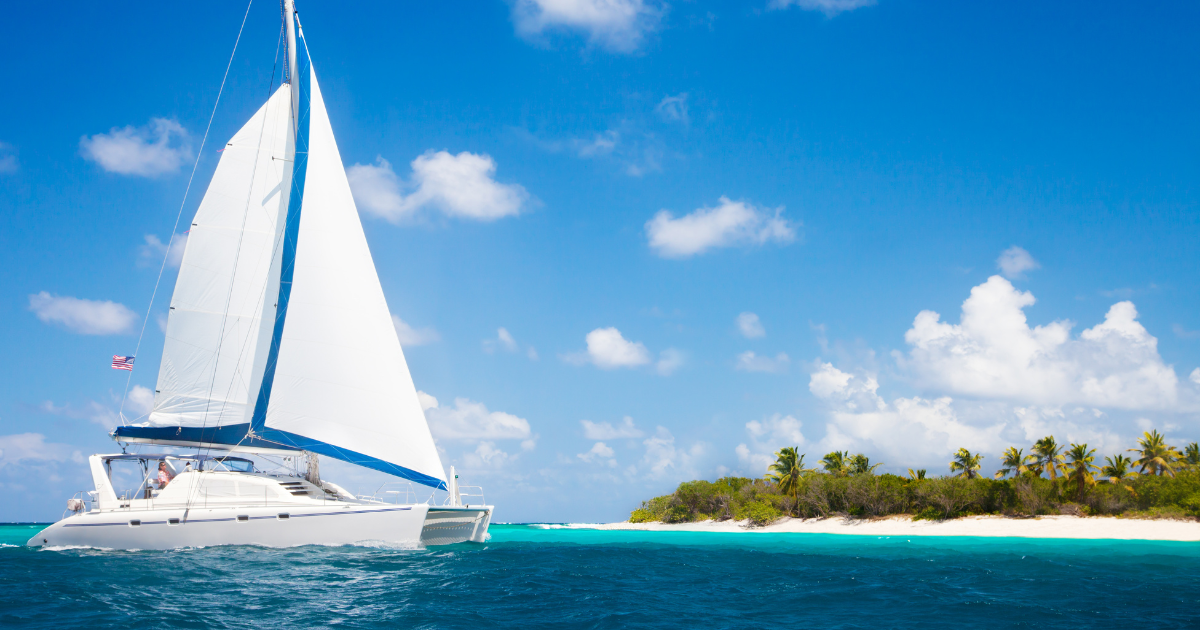
Sailing the Caribbean is one of the few destinations where you can be on warm waters throughout the entire European winter. In December, when snowdrifts reach knee-height in Northern Europe, Caribbean daytime temperatures sit around 28 °C, the water is clear, and the wind is steady.
This destination is different from what European sailors typically choose in Croatia or Greece. Islands here are more spread out, passages between them are longer, and instead of marinas, boats more often anchor in remote bays. On some islands, life is barely visible: a few dozen people on the beach, one bar, and that's it.
This guide answers the main questions before such a trip: when to go, which regions to choose, what boat to pick, how much it costs, and what to prepare for.
At a glance
📍 Location: Caribbean – BVI, Grenadines, French Caribbean, Bahamas
📅 Best season: December–April; May and November are quieter months
🚢 Boat: typically a 4-cabin catamaran
👥 Group: 6–8 people
⏱️ Duration: 10–14 days
💶 Price: from 1,000 € per person per week
✈️ Fly to: Antigua, Barbados, Saint Lucia, San Juan, Nassau (depending on route)
Why choose the Caribbean
Three things set the Caribbean apart from other sailing destinations.
First: the water. In the Caribbean it's clear enough to see the bottom at five metres. Temperatures stay around 26–28 °C throughout the season. All you need for snorkelling is a mask: corals, tropical fish, and sometimes turtles are visible right from the boat.
Second: seclusion. Islands here are more spread out than in the Mediterranean, and bays often hold only a few boats. White sand, palm trees, an empty shore. Where in Europe you'd find a town with a marina, the Caribbean typically offers just an anchorage and perhaps one beach bar.
Third: the season. When Europe is in November, the Caribbean enters its best sailing months. December to April: dry weather, steady winds, sun every day. This is one of the few destinations where you can sail in warm seas through the whole European winter.
This destination works best for:
- couples who want to spend winter in the tropics
- friend groups looking for a real island trip with longer passages
- families with older children who enjoy snorkelling and swimming
Not a fit for: those planning a weekend trip. Flights with connections take 12–16 hours, and a meaningful trip is 10–14 days. Also not for those who prefer nightly dinners at waterfront restaurants: in the Caribbean, meals happen more often onboard, and shops and bars cluster only in the main islands.x`
When to sail: season and hurricanes
The Caribbean sailing season essentially matches European winter. From December to April the weather is dry, rainfall is minimal, and steady trade winds blow from the east at about 15–20 knots. This is peak season: prices are highest, marinas and bays are busy, but sailing conditions are also the best of the year.
May and November are the shoulder months. The weather is warm and sunny, rain is light, the ocean calm. Prices during this period run 20–30 % lower than in peak season, and anchorages are noticeably emptier. It's a good time for a quieter trip or savings.
From June to early November, hurricane season runs. Officially it starts June 1 and ends November 30, with peak months in August and September. Most charter companies don't rent out boats during this window or relocate them to safe harbours. Sailing at this time makes sense only for very experienced captains, and only with a solid backup plan.
| Period | Weather and wind | Prices and crowds | Recommendation |
|---|---|---|---|
| December–April | Dry season, 26–28 °C, steady 15–20 knot winds | Peak season, highest prices | Best time to sail |
| May and November | Warm, sunny, little rain, gentler winds | About 20–30 % lower, fewer people | Good time to travel and save |
| June–October | Hot and humid, higher hurricane risk | Lower prices, but many charter boats are out of service | Better to avoid due to hurricane risk |
4 main regions in the Caribbean
The Caribbean has hundreds of islands, but sailors typically choose from four main regions. Each is different: distances between islands, landscape, culture, sailing conditions, and cost.
| Region | Sailing difficulty | Passages | Weekly catamaran price* | Best for |
|---|---|---|---|---|
| BVI | Easy | Short, usually 1–2 hrs | 8,000–12,000 € | First Caribbean trip, families |
| The Grenadines and Saint Vincent | Moderate | Usually 3–5 hrs | 7,000–11,000 € | Those seeking fewer tourists and more local life |
| Martinique, Guadeloupe and Saint Lucia | Requires more experience | Longer, up to 30–60 nautical miles | 7,000–10,000 € | Experienced sailors interested in culture and food |
| Bahamas and Turks & Caicos | Moderate | Short and medium length | 8,000–13,000 € | Those seeking quiet sailing and good diving conditions |
*Approximate weekly price for a 4-cabin catamaran in peak season (December–April). In shoulder season (May and November) prices are about 20–30 % lower.
British VIrgin Islands (BVI)
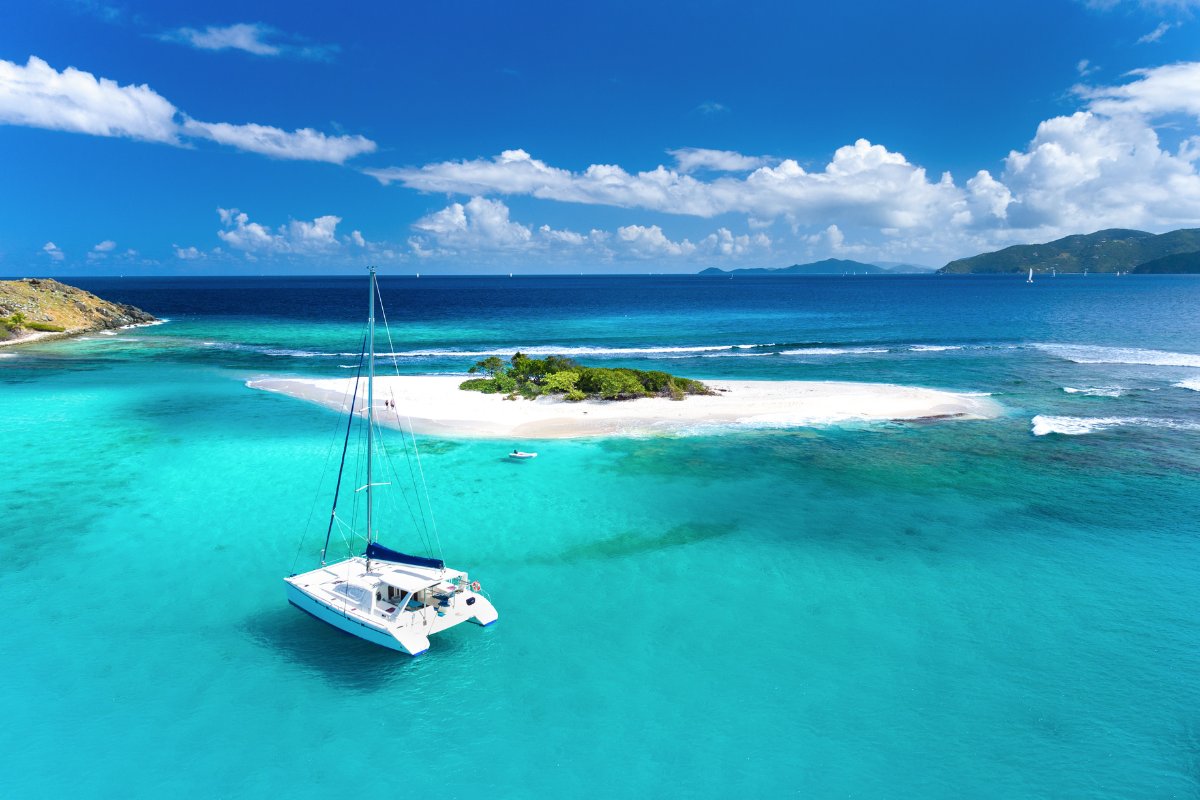
One of the easiest destinations for a first Caribbean trip. Islands are close to one another, so passages are usually short, and there's a wide choice of bays and anchorages. This makes BVI accessible to sailors with less experience.
Most itineraries visit Tortola, Virgin Gorda with the famous Baths rock formations, Jost Van Dyke, and Norman Island. Trips typically start in Tortola.
The Grenadines and Saint Vincent
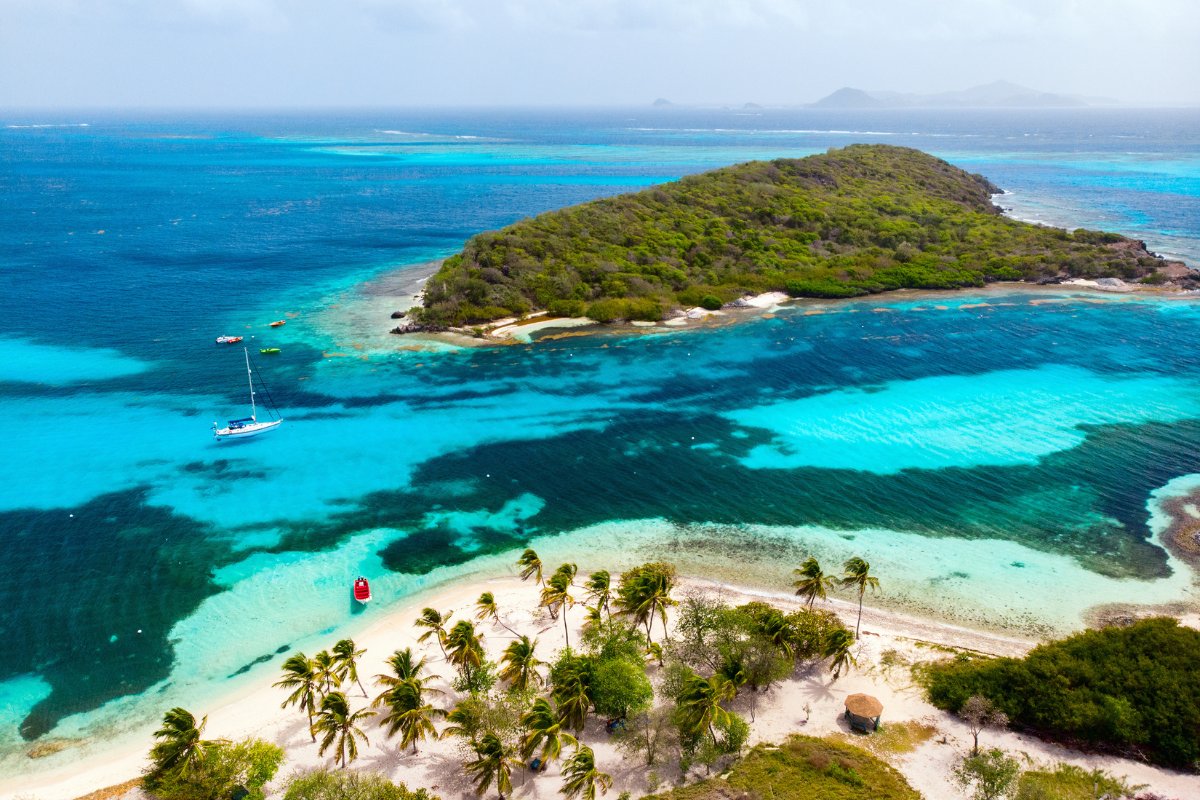
The Grenadines appeal to those looking for a less touristy, more remote Caribbean. Islands are more spread out, so passages are longer and more of the trip is spent at sea. Some sailing experience or a captain helps here.
Among the most visited spots are Bequia with its friendly island town, private Mustique, Tobago Cays where you can swim among reefs and watch turtles, and Union Island. Trips usually start in Saint Vincent or Saint Lucia.
Martinique, Guadeloupe and Saint Lucia
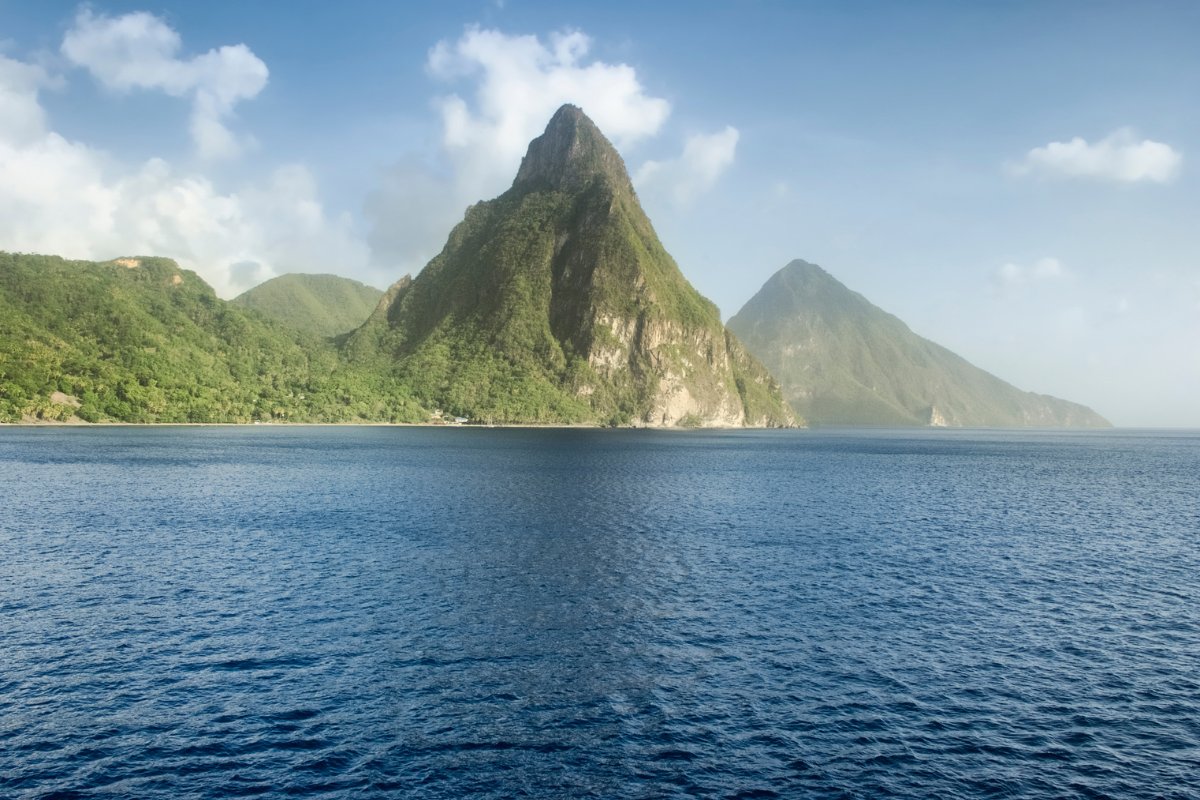
This part of the Caribbean stands out for its blend of French and Creole culture. Martinique and Guadeloupe are French territories, so the euro is used, and the French way of life, cuisine, and service are all present. Saint Lucia is English-speaking with strong Creole traditions, best known for the two Pitons rising directly out of the sea.
Distances between the islands are greater, and passages can reach 30–60 nautical miles. Plan at least 10–12 days for a comfortable trip.
The Bahamas and Turks & Caicos
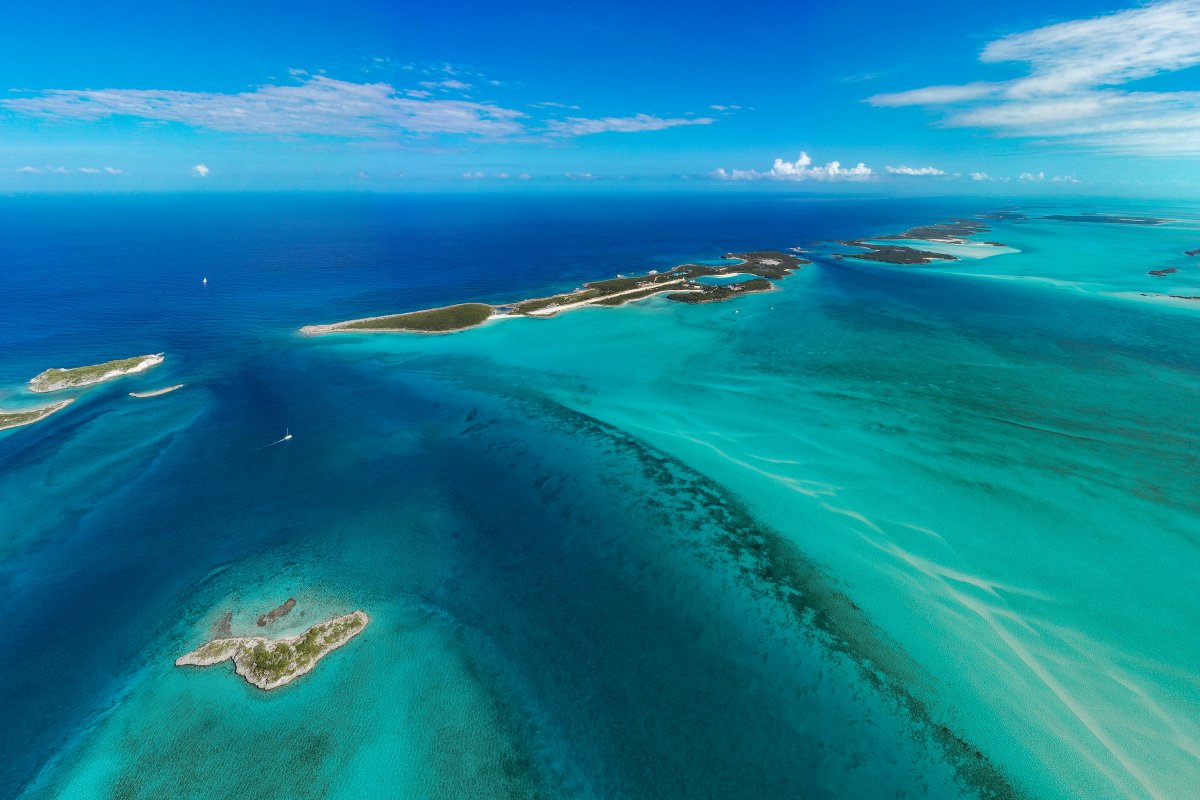
A somewhat different destination: shallow, calm waters, white-sand beaches, and sparsely populated islands. Geographically the Bahamas are not part of the Caribbean since they sit in the Atlantic, but sailing trips often group them with the region.
The water here is so clear that you can see the bottom in the shallows, with colours ranging from pale blue to bright turquoise. One of the most popular regions is Exuma Cays, with more than 300 islands and cays, many of them uninhabited.
Trips usually start in Nassau or Georgetown. The Bahamas particularly suit those looking for quiet, remote sailing, fewer people, and excellent diving conditions.
What boat to choose in the Caribbean
Choosing a boat for a Caribbean trip comes down to three main questions: with a captain or without, catamaran or monohull sailboat, and how many cabins your group needs.
With or without a captain
In BVI, the Grenadines, and most other Caribbean regions, bareboat charter (without a captain) is available with an RYA Day Skipper or equivalent licence, often together with a requirement of several years of sailing experience. If you don't have a licence or it's your first time in the Caribbean, going with a captain is worth considering.
A local captain not only handles the boat but knows where the wind is gentler this week, which bay will be quieter at night, and where the turtles feed in the morning. You won't find that kind of knowledge in brochures.
Catamaran or monohull sailboat
Most travellers in the Caribbean choose a catamaran rather than a monohull. Catamarans are wider and more stable, so they roll less, offer more deck space, and cabins are split across two hulls, giving groups more privacy. The trade-off is that they cost about twice as much as a monohull of the same length, and they sail more slowly upwind.
A monohull is cheaper, sportier, sails better upwind, but is narrower and rolls more. For families with children and friend groups who value comfort, a catamaran is usually a better fit. Couples or experienced sailors who enjoy the feel of sailing itself may find a monohull more interesting.
Number of cabins by group size
Charter boats in the Caribbean typically have 3–5 cabins. One cabin sleeps two, so group sizes map approximately to:
- 3 cabins: up to 6 guests, suits a family or two couples
- 4 cabins: up to 8 guests, for a group of friends or two families
- 5 cabins: up to 10 guests, for a larger party
If you sail with a captain, they take one cabin, leaving one less for guests. The most common choice for Caribbean trips is a four-cabin catamaran for 6–8 people.
How much a yacht charter in the Caribbean costs
Chartering a yacht in the Caribbean is more expensive than in the Mediterranean, especially in peak season. The final trip cost includes not just the boat itself but several additional expenses worth budgeting for in advance.
Weekly boat rental cost
Price depends on boat type, size, age, and season. Approximate weekly rates:
- Monohull sailboat, 3–4 cabins: from 3,500 to 8,000 EUR
- Catamaran, 3–4 cabins: from 5,000 to 12,000 EUR
- Catamaran, 5 cabins for larger groups: from 8,000 to 15,000 EUR
In peak season (December to April), prices run 30–50 % higher than in shoulder season. Newer boats (up to 3 years old) are also more expensive than older ones.
Captain's fee
If you sail with a captain, they cost about 150–250 EUR per day plus meals during the trip. Over a week that adds roughly 1,200–1,800 EUR. Some charter companies offer packages with a captain already included, and the total is often slightly cheaper.
Additional expenses
On top of the boat rental you need to add:
- Food and drinks for the group: 300–500 EUR per person per week
- Fuel: 300–600 EUR per week, depending on the route
- Harbour or anchoring fees: about 200–400 EUR per week in BVI and the Grenadines; the Bahamas cruising permit costs around 300 USD
- Final boat cleaning: usually 200–400 EUR
- Security deposit: typically 1,000–3,000 EUR held on a card and returned after the trip
Cost per person
In practice, for a group of 8 sailing a four-cabin catamaran in peak season, the trip cost per person with everything included (boat, captain, food, fuel, fees) comes to about 1,500–2,500 EUR for a week. In shoulder season the same trip can start from 1,000 EUR per person.
How to get to the Caribbean
Most European travellers reach the Caribbean via one connection through a major European hub. The trip usually breaks into two legs: a flight to the European hub, then a direct flight across the Atlantic to one of the Caribbean airports.
Connection cities
Most travellers connect through:
- Frankfurt (Lufthansa)
- Paris (Air France)
- Amsterdam (KLM)
- London (British Airways, Virgin Atlantic)
- Madrid (Iberia)
From these cities there are direct flights to the main Caribbean airports.
Caribbean airports
Which airport to fly to depends on the chosen route:
- Antigua (ANU): common starting point for trips in Antigua, Barbuda, and nearby islands
- Barbados (BGI): gateway for Windward Islands and Grenadines trips
- Saint Lucia (UVF): trips to the Grenadines or the French Caribbean
- Beef Island (EIS) or San Juan (SJU): for BVI trips
- Nassau (NAS): western Bahamas trips
- Providenciales (PLS): Turks & Caicos
- Fort-de-France (FDF) and Pointe-à-Pitre (PTP): Martinique and Guadeloupe
Travel time
Total travel time from Europe to a Caribbean airport is usually 14–18 hours with one connection. The direct Atlantic flight takes 8–10 hours, with the remainder made up of the first flight and the layover at the European hub. With two connections (for example via Miami or New York), the trip can stretch to 24 hours.
Practical tips
Arrive in the Caribbean at least a day before the charter starts. There are several reasons: flights with long connections often delay, boats are usually handed over in the morning, and sleeping the first night on a freshly received boat after 15 hours of travel isn't comfortable for everyone.
Baggage note: most charter companies ask for soft duffel bags rather than standard hard-shell suitcases, as they're easier to stow onboard.
What to know before the trip
The Caribbean runs on rules European sailors aren't necessarily used to. A few things worth knowing before you go.
Licences and documents
For bareboat charter (without a captain) in BVI, the Grenadines, and most other regions, an RYA Day Skipper licence or equivalent is required. Some companies also ask you to prove several years of sailing experience. If you sail with a captain, no licence is needed.
Passports must be valid for at least 6 months beyond the end of the trip. Some countries (Bahamas, Turks & Caicos) may ask to see a return ticket.
Visas
Visa requirements depend on the country:
- BVI: no visa needed, up to 30 days
- US Virgin Islands (San Juan transit): ESTA or B1/B2 visa required
- Martinique, Guadeloupe: French territories, but Schengen visa does not apply here; a separate permit is required
- Saint Lucia, Antigua, Grenada: no visa needed for 30–90 days
- Bahamas: no visa needed for 90 days
Check current requirements about a month before your trip, as rules change.
Currency and language
Across most Caribbean regions, the official currency is the US dollar or the Eastern Caribbean dollar (XCD), which is easily exchanged with USD. In Martinique and Guadeloupe the euro is used. Cards are accepted on the larger islands and in marinas, but it's worth carrying cash for smaller villages and bays.
The official language is English. In Martinique and Guadeloupe French is spoken, with Creole common among locals.
Electricity and plugs
The Caribbean uses 110–120 V and American-style plugs. You'll need an adapter from European to American standard. Some newer boats also have 220 V outlets, but don't count on them.
Customs between islands
Trips through the Grenadines, French Caribbean, and BVI often involve customs clearance between different countries' islands. If you sail with a captain, they handle it. Without a captain the responsibility falls to the group: you need to know the basic rules and have all passengers' passports accessible.
Insurance
Travel insurance with medical coverage and clauses for active pursuits (sailing, snorkelling) is recommended. Some charter companies also ask for a separate sailing liability insurance, which costs around 50–100 EUR per week.
Frequently asked question
Do I need a sailing licence to charter a boat in the Caribbean?
For bareboat charter (without a captain), you need an appropriate licence — typically RYA Day Skipper or equivalent — plus several years of sailing experience. With a captain, no licence is needed, as they handle navigation and boat operation.
How many days do I need for a Caribbean trip?
The optimal duration is 10–14 days. A shorter trip doesn't work well given the long flight (12–16 hours with a connection). With two weeks, you can visit more islands or combine two regions.
Is the Caribbean suitable for a first sailing trip?
Yes, if you choose the right region. The British Virgin Islands (BVI) is one of the easiest destinations: islands close together, well-marked anchorages, stable conditions. For a first trip, going with a captain is also recommended.
Are the Bahamas part of the Caribbean?
Geographically, the Bahamas are in the Atlantic, not the Caribbean. But in the context of sailing trips they're often grouped with the region due to similar climate, trip character, and season.
Can I sail during hurricane season?
Hurricane season runs from June to November, with peak months in August and September. Most charter companies don't rent boats during this period. Sailing at this time only makes sense with a very experienced captain and a backup plan.
When should I book?
For peak season (December–April), book at least 6–8 months in advance, especially if you want a specific catamaran or plan to travel during Christmas or New Year. The most popular boats fill up in the summer before the season.
Is the Caribbean suitable for family holidays with kids?
Yes, especially BVI and the Bahamas. Short passages, safe anchorages, snorkelling opportunities, and warm water suit families. A catamaran offers more space and stability while sailing.
Interested in a Caribbean trip?
We help you choose a boat based on your group and budget.
→ Send an inquiryIf you're still considering, you may find helpful:
→ Sailing Sicily: Aeolian Islands and 3 routes