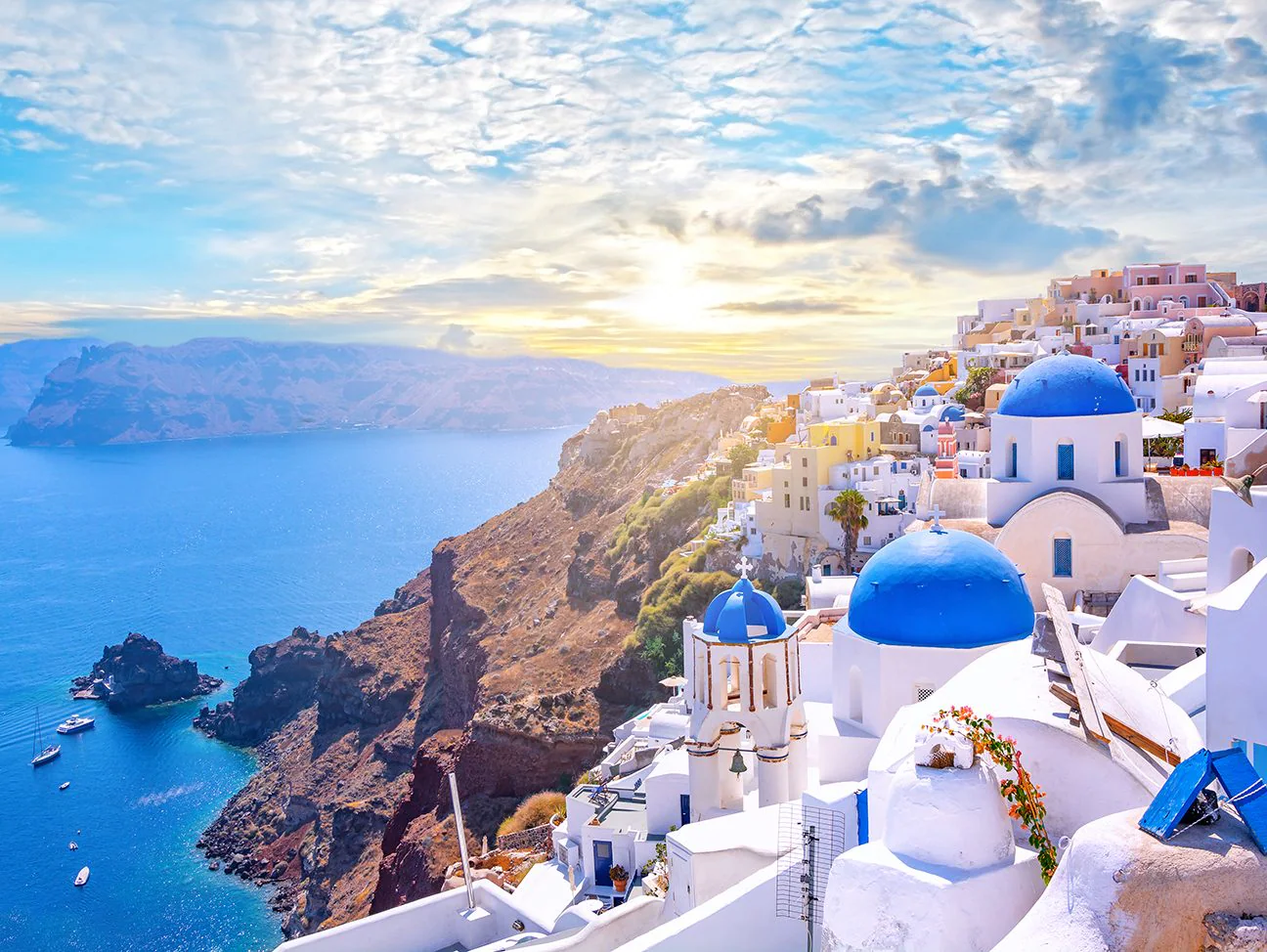
The Cyclades sit in the middle of the Aegean Sea, southeast of Athens, and they are probably the most recognizable image of Greece: whitewashed houses, blue domes, rocky coastlines, and water that changes color by the hour.
This is a different region from the Ionian Sea. In the Cyclades, the wind blows harder, the distances between islands are longer, and the pace on board is livelier. You don't sail here to escape the world - you sail here to see one of its most famous views from the deck of your own boat.
This guide covers three routes through the Cyclades, practical guidance on the Meltemi wind, and everything worth knowing before you choose this region for your sailing trip.
At a glance
📍 Location: Cyclades - Mykonos, Paros, Naxos, Santorini, Milos
📅 Season: May–October, calmest in June and September
🚢 Boats: catamaran or monohull, often with a skipper
👥 Best for: couples and groups wanting the classic image of Greece
⏱️ Duration: 7 days
✈️ Fly to: Athens, Mykonos, or Santorini
💶 Price: from ~€2,100/week base rate (before APA)
Why the Cyclades?
If your mental image of Greece is whitewashed houses on a cliff and blue domes against a sunset, that's the Cyclades, not the Ionian Sea. This region covers Greece's most famous names: the cliffs of Santorini, the windmills of Mykonos, the fishing harbours of Paros, and the lunar landscapes of Milos.
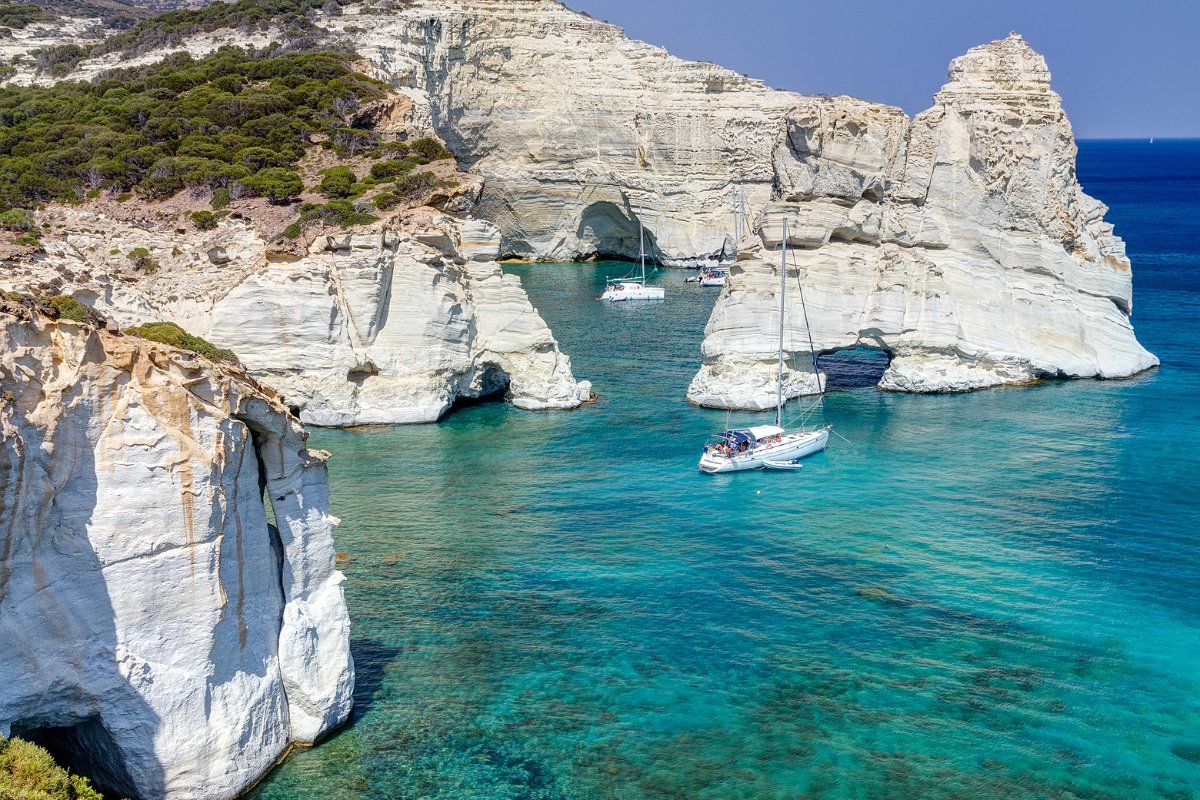
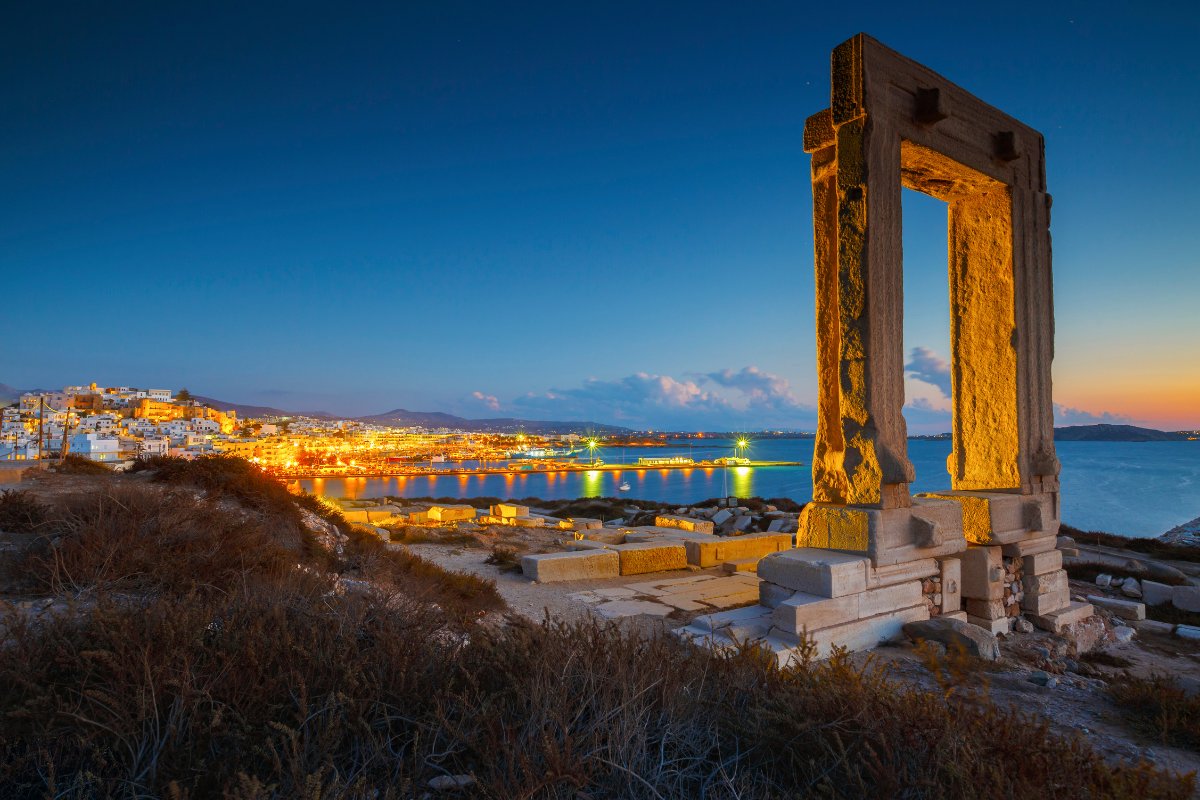
Every island has its own character. Naxos is the largest island in the Cyclades, with the Portara gate and the Tragea valley behind it. Paros is quieter, built around the fishing port of Naoussa and old marble quarries. Milos is volcanic, with the sea caves of Kleftiko and the white rock formations of Sarakiniko that look like another planet.
The pace here is livelier than in the Ionian: more open water, longer crossings, and more contrast between islands over a single week.
The atmosphere shifts from island to island, too. Mykonos and Ios lean into a lively beach-club and nightlife scene, while Naxos, Sifnos, and Milos stay closer to everyday island life: fishing boats, small tavernas, and villages that haven't been built around tourism the same way. A well-planned week usually mixes both, so the trip doesn't turn into one long party or, at the other extreme, feel like it's missing the energy the Cyclades are known for.
Cyclades or Ionian?
The Ionian Sea remains the calmest sailing region in Greece: islands close together, gentler winds, easy to plan for a first trip. The Cyclades mean a more open stretch of the Aegean, the Meltemi wind, and longer distances between islands - but in return you get the view most people picture when they hear the word 'Greece.'
If you want a calmer, easier-to-plan week, start with the Ionian. If the postcard image of Greece matters most to you, and you feel confident on the water, choose the Cyclades.
→ Where to Sail in Greece? 3 Proven Ionian Sea Itineraries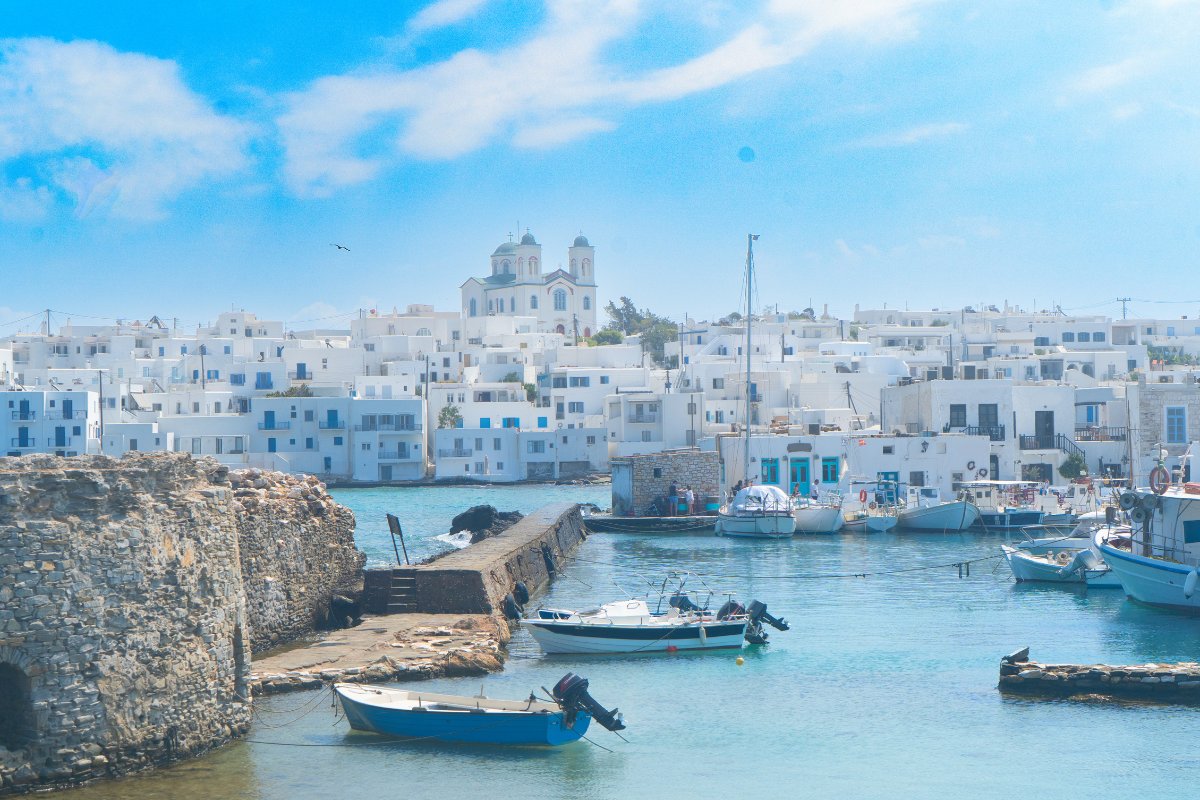
When is the best time to sail Cyclades?
The sailing season in the Cyclades runs from May to October. It's inseparable from the Meltemi - a dry northerly wind that blows through the summer and is the main difference compared to the Ionian Sea.
The Meltemi typically reaches force 5–7 on the Beaufort scale, gusting to force 8–10. In the early morning, roughly until 9am, it's usually lighter. It builds through the day and tends to calm down again in the evening and overnight.
| Period | Conditions | Best for |
|---|---|---|
| May–June | Lighter wind, fewer people in harbours | A calmer, easier-to-plan week |
| July–August | Peak Meltemi, strong sustained winds | Experienced sailors, active pace |
| September | Wind easing off, sea still warm | One of the most pleasant periods |
3 routes through Cyclades
1. Mykonos – Paros – Naxos – Santorini
The classic route - the postcard image of Greece
Crossings: medium (2–4 hrs) · Experience level: ★★★☆☆ · Recommended boat: catamaran or monohull with a skipper
This route combines the most famous names in the Cyclades in a single week. Start in Mykonos, where it's worth spending a day around Little Venice and the windmills before setting off.
From Mykonos, sail south to Paros, stopping at the fishing harbour of Naoussa, one of the calmer towns in the Cyclades. Next comes Naxos, the largest island in the region, with the Portara gate at the harbour entrance and the Tragea valley running down from the mountains.
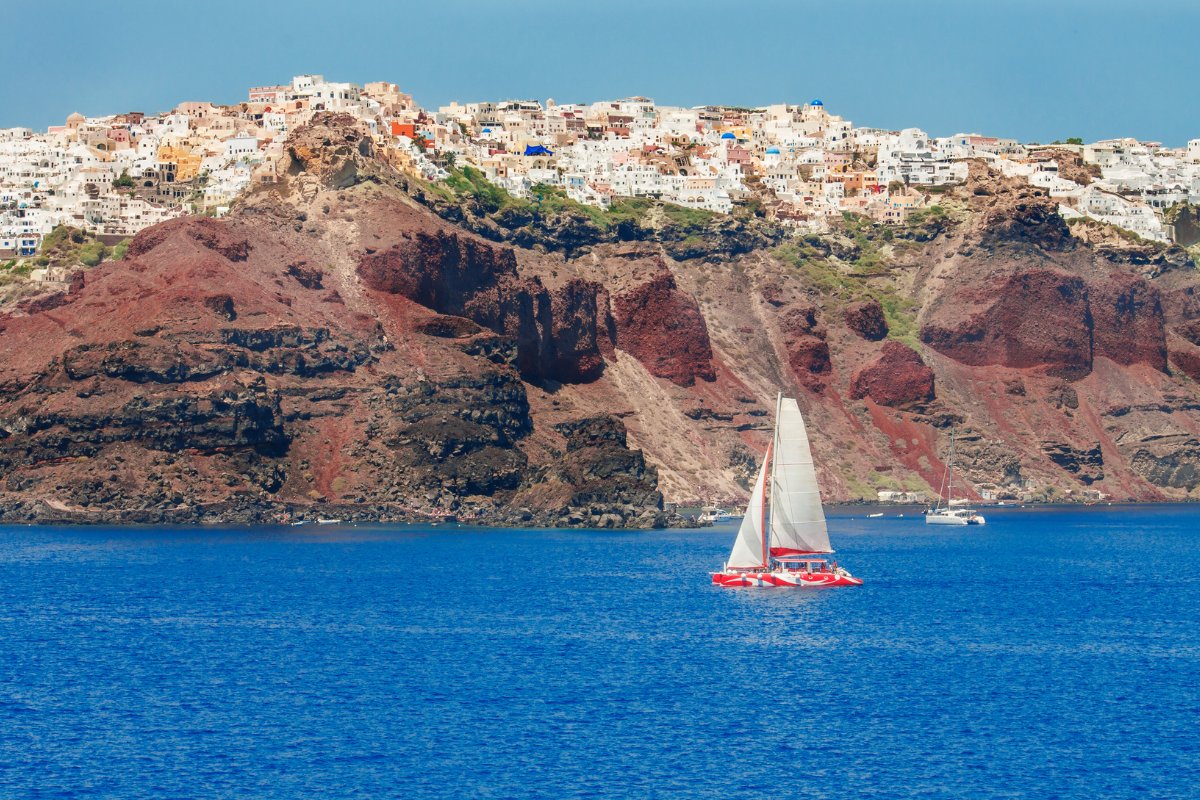
The route ends in Santorini: the sunset in Oia, the archaeological site at Akrotiri, and Vlychada beach. Because this route runs mostly south, most of the sailing is downwind, and the return leg needs more planning around the wind.
2. Paros – Anti Paros – Sifnos – Milos
A quieter route - fewer crowds
Crossings: short to medium (1–3 hrs) · Experience level: ★★☆☆☆ · Recommended boat: sailboat or catamaran
This route starts in Paros, which works well as a base in its own right and cuts out long transit legs. From here you reach Antiparos, a small island just a few miles from Paros, with quieter beaches.
Next is Sifnos, known for its pottery villages and hiking trails between whitewashed chapels. The route ends on Milos, where the sea caves of Kleftiko and the lunar landscape of Sarakiniko wait - some of the most unexpected scenery anywhere in Greece.
This is the route for anyone who wants to see the Cyclades without the biggest crowds: lesser-known islands, but the same authentic character.
3. Mykonos – Amorgos – Ios – Santorini
A more active route - longer crossings
Crossings: long (4–6 hrs) · Experience level: ★★★★☆ · Recommended boat: catamaran with a skipper (experienced sailors: monohull)
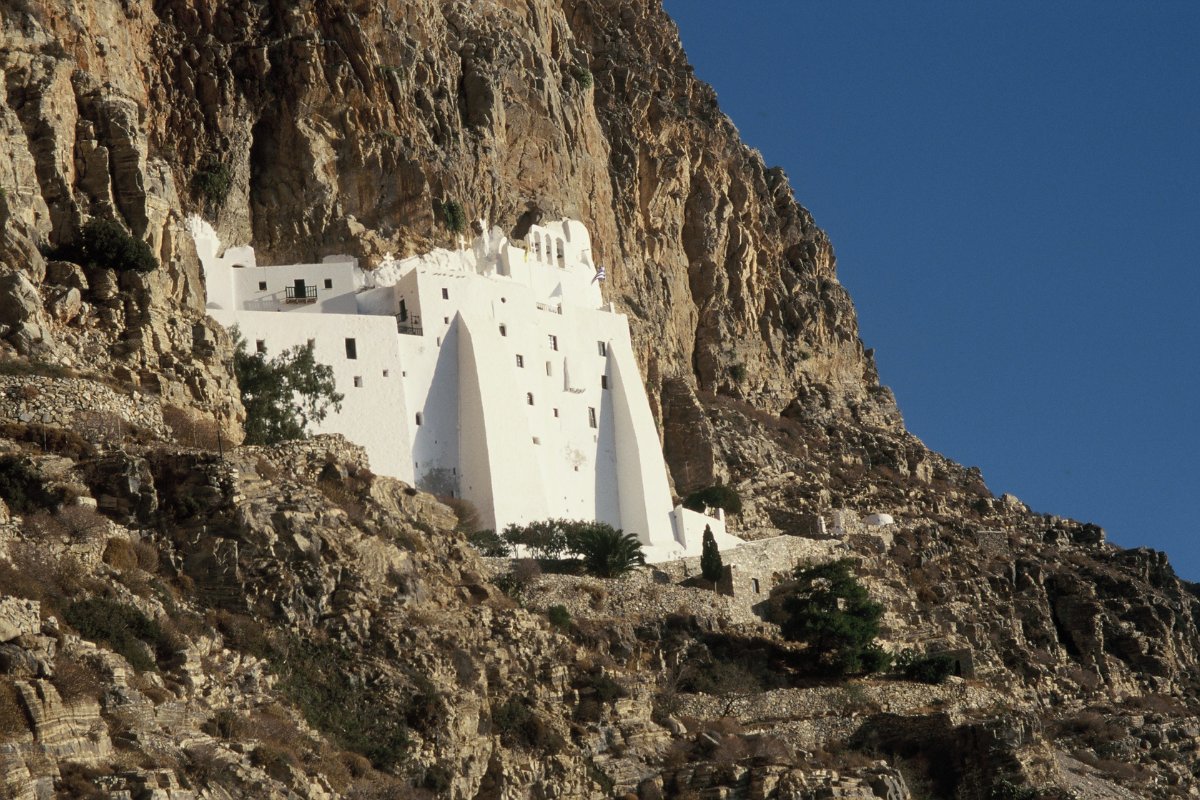
This route is for sailors who already have some experience and want more open water. From Mykonos, sail further east to Amorgos - one of the wildest and most dramatic islands in the Cyclades, known for the Hozoviotissa monastery built into the cliff face.
Next is Ios, an island with a lively nightlife scene but also quiet beaches away from the centre. The route ends in Santorini.
Because this route runs through more open Aegean water, the Meltemi is felt at its strongest here - crossings are longer, so it helps to have more experience or to sail with a skipper.
Getting there
Most charters in the Cyclades start from Athens (Alimos, Lavrio, or Piraeus marinas), Mykonos, Paros, or Santorini, all of which have direct flights from several European hubs during the sailing season. Starting in Athens usually means a longer first day at sea to reach the islands proper, while starting in Mykonos, Paros, or Santorini gets you into the Cyclades faster but can cost more for flights.
If your group is flying in from different cities, Athens is often the easiest starting point to coordinate around, even if it adds a few extra hours of sailing on day one.
Which boat suits the Cyclades best?
Catamaran
More stable in open water when the Meltemi picks up the swell. More deck and cabin space - a good choice for a family or a larger group that values comfort.
Monohull
A more traditional sailing feel, with more of the wind. Requires more experience, especially in July and August when the Meltemi is at its strongest.
With a skipper
Often recommended in the Cyclades for anyone without much experience in stronger wind - a skipper knows when to change the route and where to shelter.
Bareboat (no skipper)
Suitable for experienced sailors with the required licence. Consider the calmer months (May–June or September) if you're less experienced with stronger wind.
What does a week in a Cyclades really cost?
The table below shows the base charter rate - what you pay for the boat itself. That's not the final budget, though: on top of it comes the APA (Advance Provisioning Allowance), typically 25–40% of the base rate, which covers fuel, food, harbour fees, and other running costs for the week.
For example, if a catamaran's base rate is €2,800 and the APA is 30%, the real weekly budget comes to around €3,640, not counting flights or travel insurance. The table below shows both figures, so the picture is honest from the start.
| Boat type | Base rate/week | Real budget incl. APA/week |
|---|---|---|
| Sailboat (bareboat) | ~€2,100 – €2,800 | ~€2,700 – €3,650 |
| Catamaran (bareboat) | ~€2,800 – €4,800 | ~€3,650 – €6,250 |
| Crewed catamaran | from ~€10,000 | from ~€12,500 |
Marina fees come on top of that: small harbours charge around €5–15 a night, busier marinas €25–65 a night, and catamarans often pay a 50–80% surcharge. We'll confirm exact figures once we know your dates, base, and boat.
What to know before you go?
- Plan longer crossings for the morning, before 9am, while the Meltemi is usually lighter.
- On the windiest day of the week, it's better to stay in a sheltered bay or harbour rather than open water.
- Plan the route so the longer legs run downwind - south or west - and save any upwind hops for shorter, easier stretches.
- The wind usually eases in the evening, a good window for a short final crossing into harbour.
- In peak season (July–August), popular harbours like Mykonos or Santorini fill up - book ahead or have a backup plan.
- Check the forecast daily rather than relying on a single outlook at the start of the week - the Meltemi can strengthen or ease over a couple of days.
- Pack for wind: a windbreaker and secure sunglasses matter more here than in the calmer Ionian Sea.
Thinking about a trip to the Cyclades?
We'll help you choose the right boat for your group and budget.
→ Send an inquiryStill deciding? These might help:
→ Where to Sail in Greece? 3 Proven Ionian Sea Itineraries