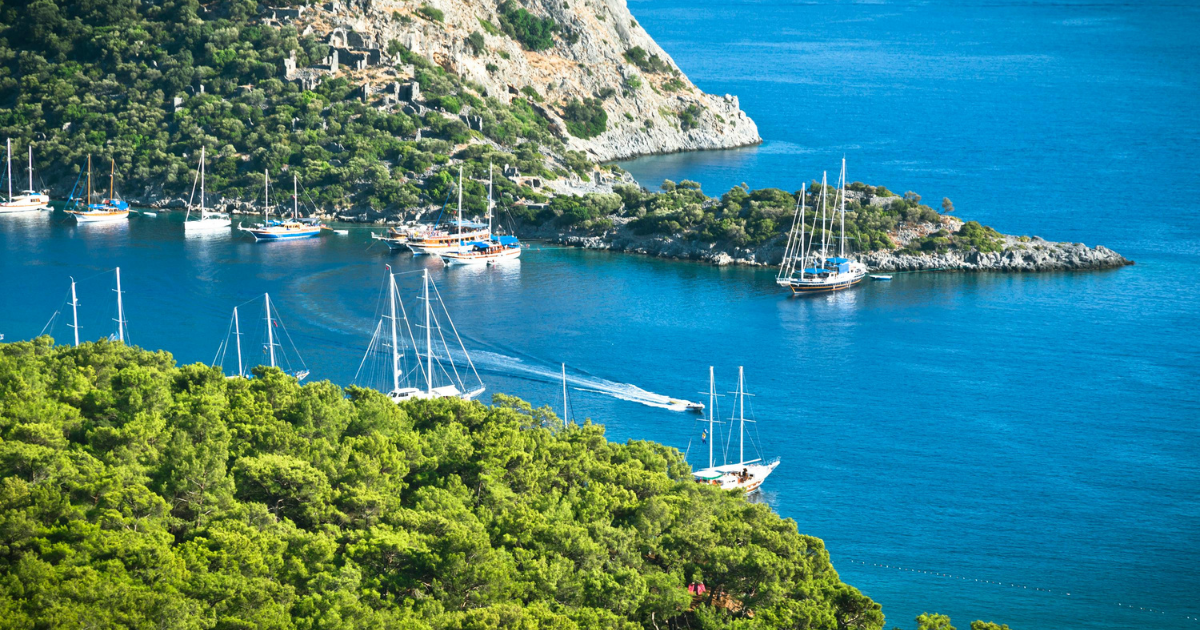
Sailing in Turkey rarely makes the first shortlist, which usually starts with Greece or Croatia. That is a pity, because the Gulf of Fethiye is one of the easiest places in the Mediterranean for a first sailing holiday. A ring of islands and headlands keeps the open-sea swell out, most hops between anchorages take an hour or two, and at night you tie the boat to a pine tree on shore.
This coast was once ancient Lycia, and it shows. Rock-cut tombs look down on Fethiye harbour, the ruins of Cleopatra's Baths sit half underwater in Göcek Bay, and at Kekova you sail over the remains of a city that sank after an earthquake. Dinner often comes with its own jetty: many bays have a family-run fish restaurant where you can moor for the night.
This guide covers three routes from Fethiye to Göcek, from a gentle week among the islands to ten days along the Lycian coast. Each one comes with distances in nautical miles and a difficulty rating. You will also find the best months to go, how to choose between a monohull and a catamaran, what a charter price usually includes and the practical details to sort out before you fly.
At a glance
📍 Location: Fethiye and Göcek, southwest Turkey (Lycian coast)
📅 Season: May to October, best for a first trip in June and September
🚢 Boats: monohull or catamaran, skippered or bareboat
👥 Best for: families and first-time sailors, longer route for experienced crews
⏱️ Duration: 7–10 days, 40–150 nautical miles
✈️ Fly to: Dalaman (DLM), about 20 minutes from Göcek
💶 Price: on request, depending on the boat, the week and whether you take a skipper
Why go sailing in Turkey
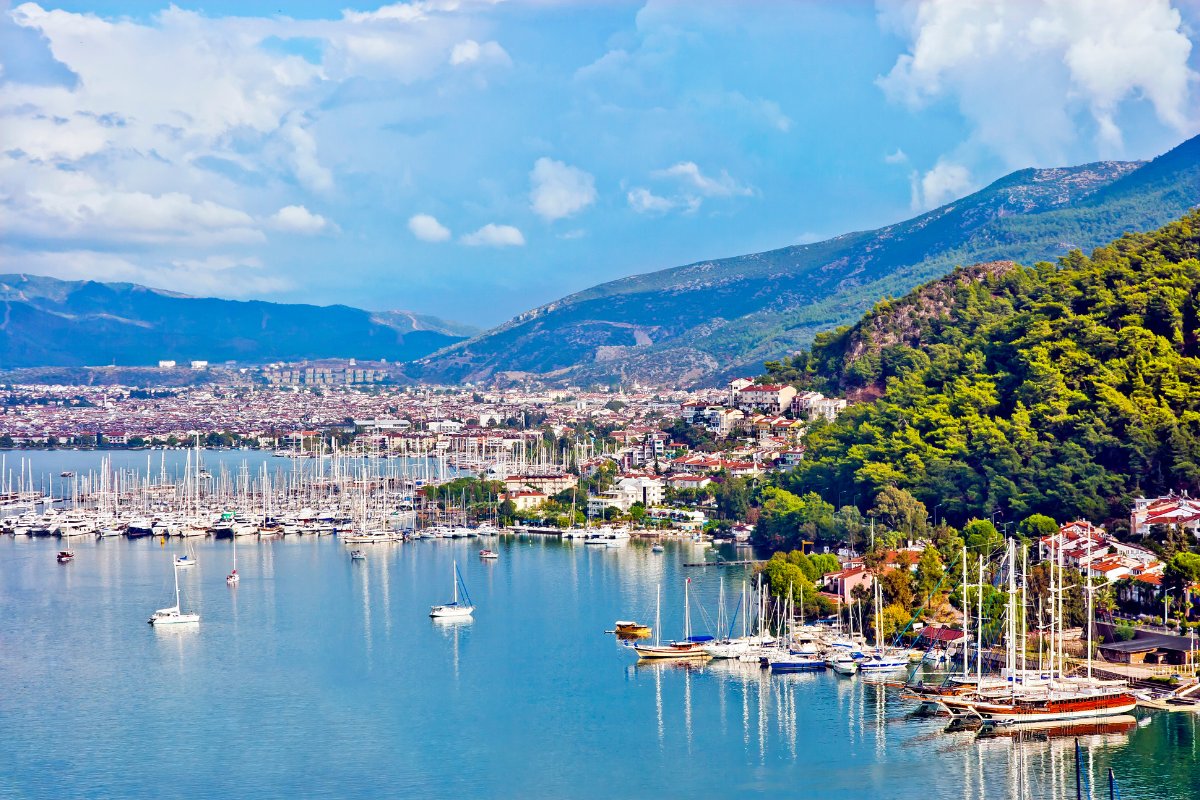
The first reason is calm water. Göcek Bay is wrapped by mountains and more than a dozen islands, so even on a breezy afternoon the sea stays fairly flat. For first-time sailors that means less rolling, fewer queasy stomachs and more time in the water.
The second is the way you moor. In most anchorages you drop the anchor, reverse towards land and run a long line from the stern to a tree or a ring set into the rock. It lets small coves hold more boats without feeling crowded, and you fall asleep a few metres from the pine forest.
Third, food takes very little planning. Many bays have restaurants with their own jetties: you moor, eat grilled fish and stay the night, usually with no mooring fee as long as you dine. In the mornings small boats often motor between the yachts selling fresh bread, fruit and ice cream.
Fourth, getting to the boat is quick. Dalaman Airport is about 20 minutes by road from Göcek and around 45 minutes from Fethiye. You can land in the morning and be unpacking on board by the afternoon.
Finally, the history is something you can swim to. The Lycians carved their tombs into these cliffs more than 2,000 years ago, and the ruins here are not behind museum glass. They are in the same coves where you drop anchor. In a week on a yacht you will see six or seven different bays, where a hotel holiday usually gives you one beach.
When is the best time to sail in Turkey
The sailing season on the Fethiye and Göcek coast runs from May to October. For a first trip, June and September are the best months: the sea is warm, the afternoon breeze is moderate and it is easier to find space in the popular bays.
July and August are the hottest and busiest months. Daytime temperatures reach 34–35 °C, and in the best-known anchorages it pays to claim your place at a restaurant jetty by early afternoon. May and October are quieter, with the water around 20–24 °C. By late October some bay restaurants may already have closed for the season, so expect to cook on board more often.
The wind follows a clear daily pattern. Mornings are usually calm, and a westerly breeze builds in the afternoon. The simple rule is to sail in the morning and spend the afternoon at anchor.
| Month | Air / sea | Wind | Boats in the bays |
|---|---|---|---|
| May | about 25 °C / 20–21 °C | light, gentle afternoon breeze | few |
| June | 29–30 °C / 23–24 °C | moderate westerly in the afternoon | moderate |
| July–August | 34–35 °C / 26–28 °C | calm mornings, stronger westerly in the afternoon | busiest |
| September | about 31 °C / 26–27 °C | moderate westerly in the afternoon | moderate |
| October | about 26 °C / 23–24 °C | easing, first rain possible | few |
Sailing routes from Fethiye
All three routes start in Fethiye and finish in Göcek. The two marinas are only 15 nautical miles apart, so you never spend the last day sailing back to where you started. Difficulty is rated from one to five stars.
1. Göcek Islands: 7 days, about 40 nautical miles ★☆☆☆☆
The easiest of the three. You spend the whole week inside sheltered Göcek Bay, and the longest leg is 12 nautical miles, roughly two hours under sail. A good fit for a first sailing holiday or a family with children.
Stops: Fethiye → Yassıca Islands → Tersane → Bedri Rahmi Bay → Cleopatra's Baths → Boynuz Bay → Göcek
On day two, the Yassıca Islands surround a shallow turquoise lagoon, one of the best swimming spots in the area. Tersane, whose name means "shipyard", still has the ruins of an old village and boatyard on its shore. In Bedri Rahmi Bay, look for the fish painted on a rock by the Turkish artist the bay is named after. Cleopatra's Baths are best explored with a mask and snorkel, as part of the ruins lie underwater. The last night is in Boynuz Bay, a narrow inlet lined with pines, which leaves just 5 nautical miles to Göcek marina the next morning.
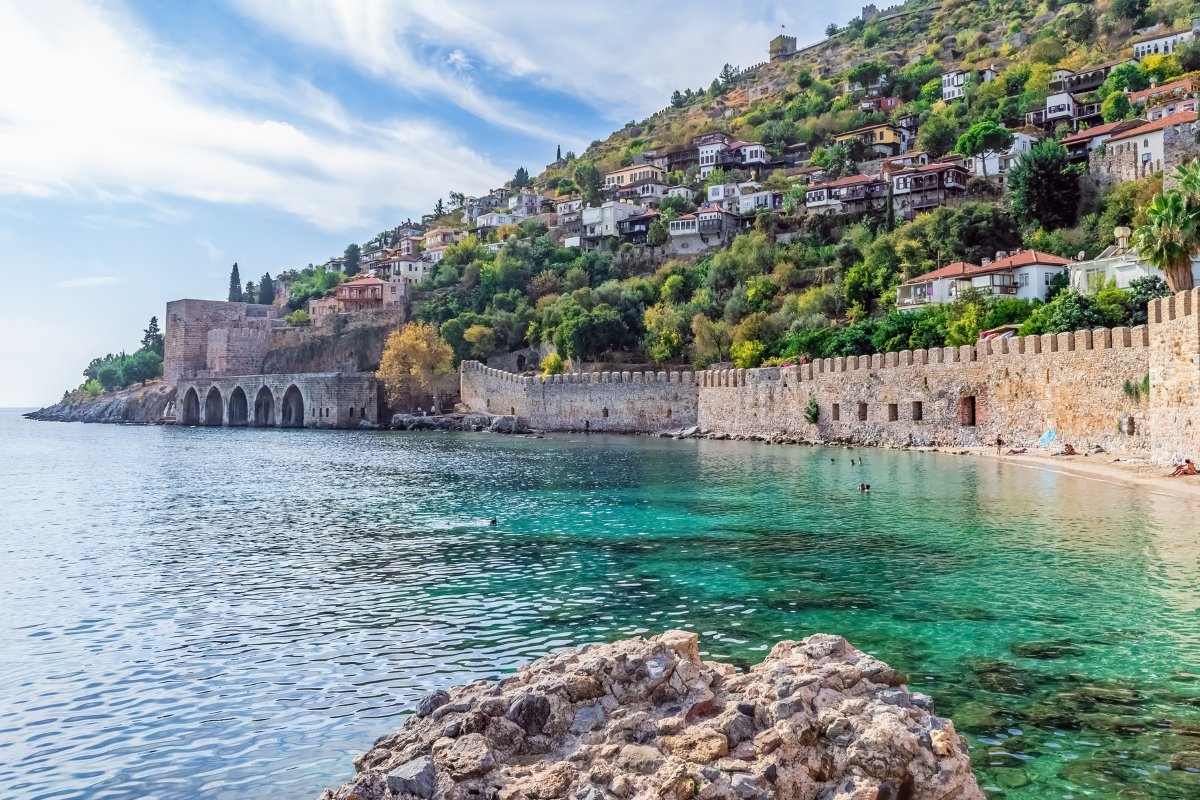
2. Ölüdeniz and the Göceko Islands: 7 days, about 60 nautical miles ★★☆☆☆
The first days take you along the open coast south of Fethiye, and the second half of the week returns to the calm of Göcek Bay. This route suits a first trip with a skipper, or a crew who has sailed at least once before.
Stops: Fethiye → Gemiler Island → Ölüdeniz and Butterfly Valley → Yassıca Islands → Tersane → Cleopatra's Baths → Göcek
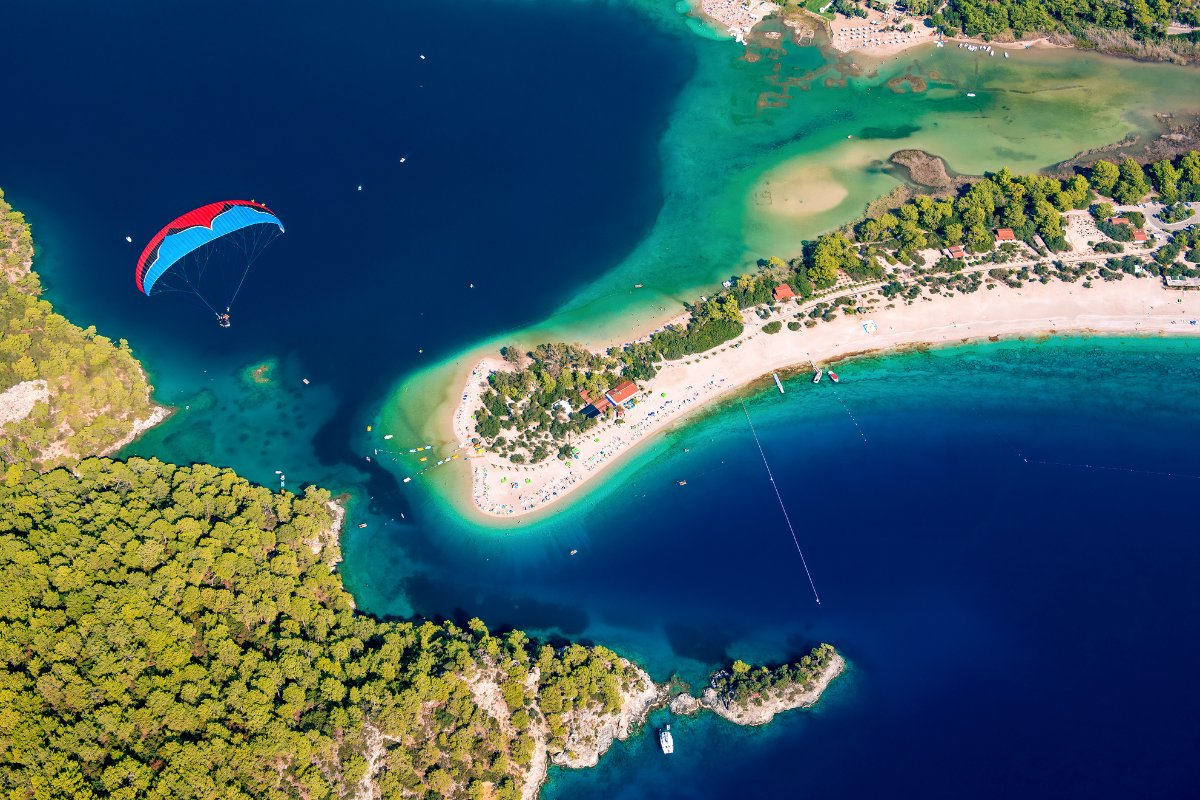
Gemiler, also known as St Nicholas Island, is covered in the ruins of Byzantine churches from the 4th to 6th centuries. On day three you pass the Blue Lagoon at Ölüdeniz, where paragliders drift down from the mountain above, and anchor off Butterfly Valley: a beach wedged between sheer cliffs, with a path up to a waterfall. The longest leg, 20 nautical miles to the Yassıca Islands, takes about four hours. The rest of the week is relaxed, with Tersane, Cleopatra's Baths and the finish in Göcek.
Butterfly Valley is exposed to the westerly wind, so whether you stay the night there depends on the forecast. If the sea is rough, your skipper will choose a more sheltered bay nearby.
3. The Lycian Coast to Kekova: 10 days, about 150 nautical miles ★★★☆☆
The longest route is for crews with sailing experience or those travelling with a skipper. Several open-sea legs take 4–6 hours, and the longest, 35 nautical miles from Kaş to Butterfly Valley, fills most of a day.
Stops: Fethiye → Gemiler Island → Kalkan → Kaş → Kekova and Simena → Kaş → Butterfly Valley → Tersane → Göcek
The first half of the trip heads east beneath high coastal mountains. Kalkan is a small town of white houses stacked up a hillside, with restaurants on the rooftops. In Kaş, an ancient theatre sits right by the sea and a Lycian sarcophagus stands in the middle of a street.
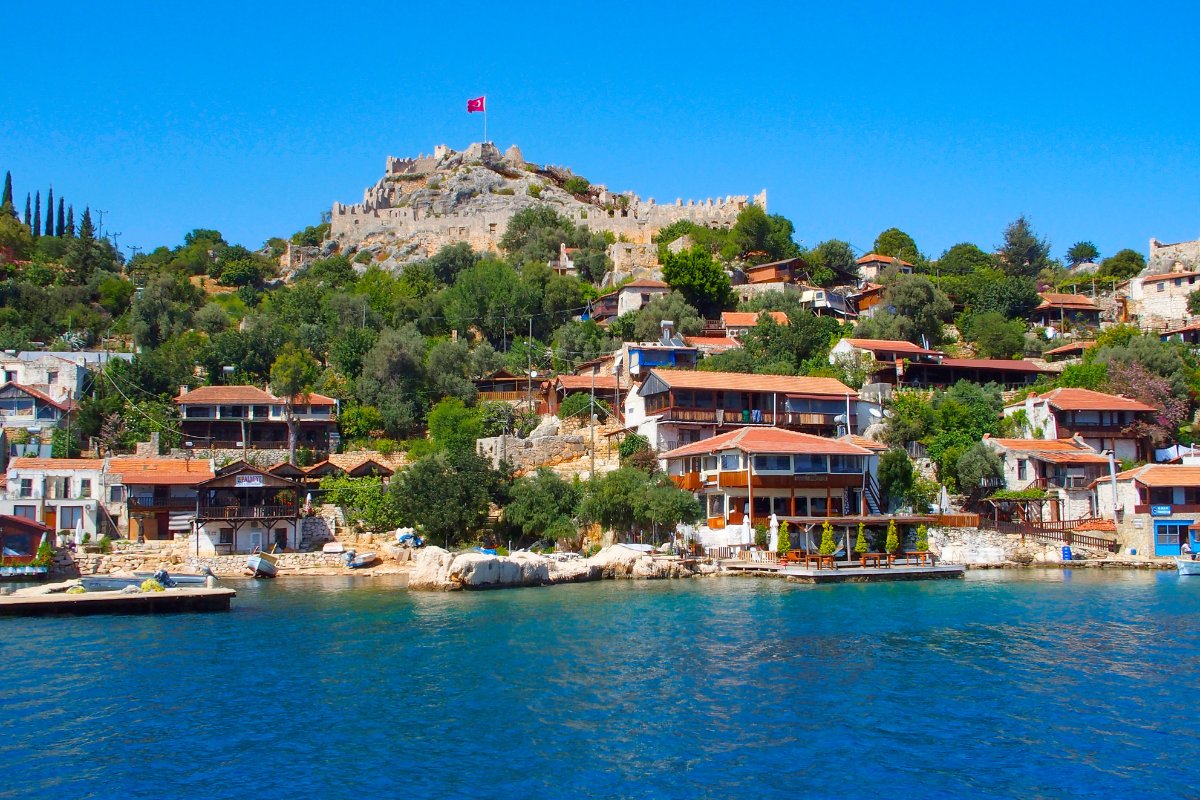
Kekova is the goal of this route. Off the island, the ruins of a city sunk by an earthquake lie just beneath the surface. Swimming over them is not allowed, so you see them by motoring slowly past. The village of Simena, with its castle on the hill, can only be reached by sea, and another Lycian sarcophagus stands in the water just offshore. On the way back you spend a second evening in Kaş, then return to Göcek via Butterfly Valley and Tersane.
Good to know: Göcek and Fethiye bays have strict rules on wastewater. Every yacht carries a blue card (Mavi Kart) that records when the holding tank was last emptied. You receive the card with the boat and empty the tank at marinas or pump-out stations in the bays. Discharging wastewater into the sea carries heavy fines.
Whick boat should you choose?
Monohull or catamaran?
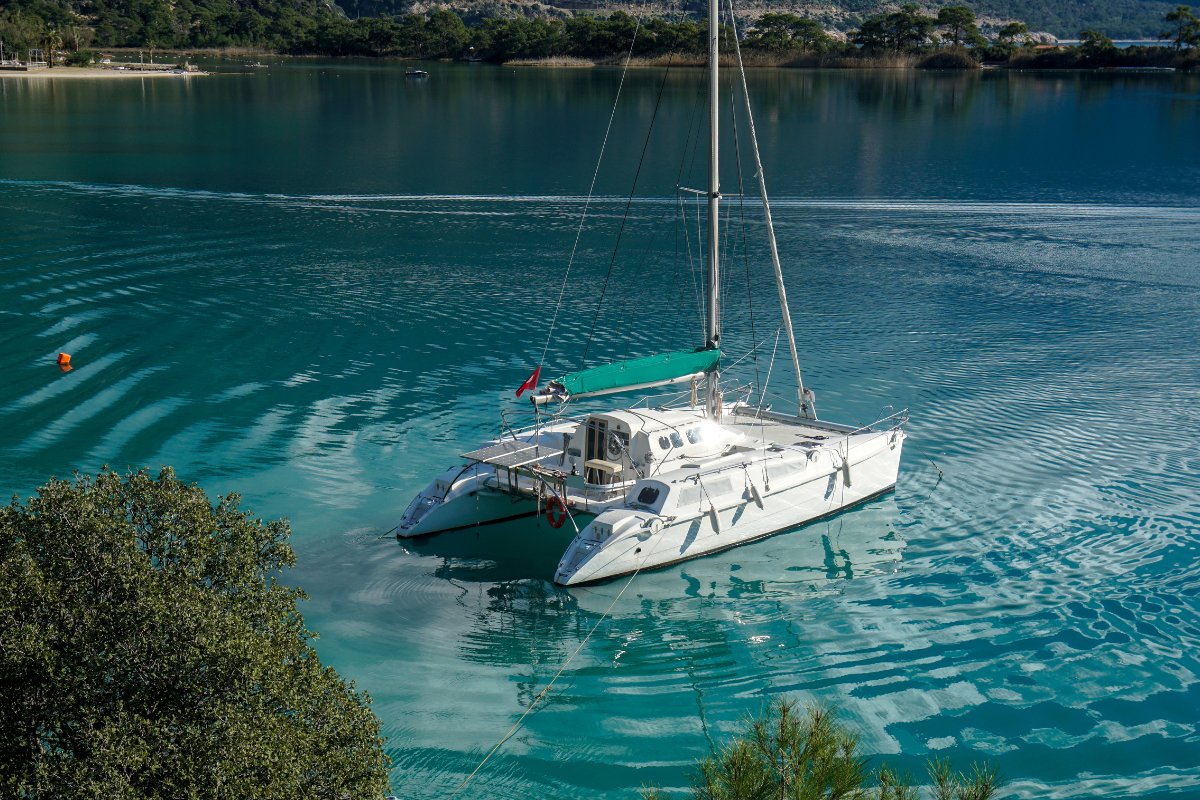
A monohull is the right choice if you want to feel the sailing: the boat heels, you hear the wind in the sails and the charter costs less. For a group of four to eight people, a yacht with three or four cabins is usually enough.
A catamaran is more stable and more spacious. It stays level under sail, most cabins have their own bathroom, and the wide aft deck works well for families with children. A catamaran also has a shallower draft, so in shallow bays such as the Yassıca Islands you can anchor closer to the beach.
Skippered or bareboat?
To charter a yacht without a skipper you need a recognised sailing licence, and usually at least one crew member must hold a VHF radio certificate. The exact requirements are set by the charter company, and we help you check them before you book.
A skipper is worth considering even if you have sailed before. They know which bays have restaurant jetties, how to tie a shore line safely and where to shelter from the afternoon wind. When you plan berths, remember that the skipper needs a cabin of their own.
What does a yacht charter in Turkey include?
The price of a yacht charter in Turkey depends on the size of the boat, the week you choose and whether you sail with a skipper. When you compare offers, it helps to know what the base price covers and what you pay on top.
| Cost | How it is paid |
|---|---|
| Yacht hire, standard equipment, dinghy | Included in the base price |
| Basic yacht insurance | Included in the base price |
| Transit log | Extra, usually paid before departure |
| Final cleaning, bed linen | Extra, depends on the charter company |
| Fuel | Paid for what you use, on return |
| Marina fees | Paid locally; bays and restaurant jetties are often free |
| Skipper and their meals | Extra, per day |
| Security deposit | Refunded if the yacht is returned undamaged |
When we reply to an enquiry, we quote the full amount including all extras. That way you compare the real cost of the trip, not just the base prices.
What to know before you go
Entry and visas
Citizens of the UK and most EU countries can visit Turkey visa-free for up to 90 days within any 180-day period. Rules depend on your nationality and change from time to time, so check your government's travel advice before you book flights.
Money
Turkey's currency is the Turkish lira (TRY). Cards are accepted in marinas, supermarkets and most restaurants. Keep some cash for markets, small shops and the boats that bring bread and ice cream into the bays.
Mooring with the shore line
In Göcek Bay you will usually moor like this: drop the anchor, reverse towards the shore, and one crew member takes a line ashore by dinghy or by swimming and ties it to a tree or a ring in the rock. It feels awkward the first time and routine after a couple of days. If you are sailing without a skipper, ask the charter company to walk you through it at check-in.
Food and provisioning
It is easiest to do the big shop before you set off. Fethiye has a large market every Tuesday with fruit, vegetables, cheese and spices, and Göcek has several supermarkets. Many charter companies can also deliver a pre-ordered food package straight to the boat for an extra fee.
Time zone
Turkey stays on UTC+3 all year round and does not switch between summer and winter time. Check the time difference with your home country before planning your arrival day.
Frequently asked question
Do I need a visa to go sailing in Turkey?
Citizens of the UK and most EU countries do not need a visa for tourist stays of up to 90 days within 180 days. Check the rules for your nationality before you travel.
Can I go sailing in Turkey with no experience?
Yes, if you charter with a skipper. The Göcek Islands route is the best choice for a first trip: the legs are short and the water is calm.
When is the sea warmest in Turkey?
In August and September, when the water temperature reaches about 26–28 °C.
What is the difference between Fethiye and Göcek?
Fethiye is a larger town with an old quarter, a weekly market and Lycian tombs in the cliffs. Göcek is smaller, with several marinas that open straight onto the island-filled bay, and it is only 20 minutes from Dalaman Airport.
How many people fit on a yacht?
A monohull with three or four cabins usually sleeps six to eight people. A four-cabin catamaran suits groups of up to eight to ten.
Is Turkey a good place for a first sailing holiday?
Yes. Göcek Bay is sheltered from the open sea, the distances between anchorages are short and there are restaurants with jetties in many bays, so the logistics stay simple.
Interested in sailing in Turkey?
We help you choose the right yacht and route for your group, experience and budget.
→ Send an inquiryIf you're still considering, you may find helpful:
→ How much does yacht charter in the Mediterranean cost? Bareboat prices 2026